


The outer case of our CVP hubs now contains at least 90% certified recycled aluminium—a major milestone in our journey toward circularity and a lower product carbon footprint.

Recycling is essential to a greener, more circular economy. By turning potential waste streams into valuable inputs, we reduce dependence on finite natural resources and cut emissions linked to material processing. Yet, despite these clear benefits, only a fraction of global waste is actually recycled. Why? Because effective recycling requires conscious effort across the value chain. For companies like ours, that means designing products for recyclability at scale and using recycled materials in production.

At Enviolo, we’ve already made significant progress on recyclability. Our CVP hubs are primarily made from steel and aluminium—two metals that are both highly and infinitely recyclable—giving our hubs a 93% recyclability rate at end of life.
But recyclability alone isn’t enough. Our goal is to close the loop at the input stage by reducing reliance on virgin resources and maximizing recycled content. The benefits are clear: using recycled metal saves up to 72% of energy for steel and 95% for aluminium compared with virgin production, making recycled content a powerful lever for decarbonization.
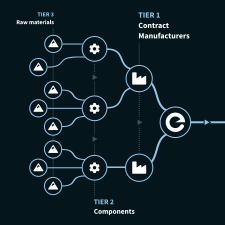
Still, introducing recycled inputs is far from simple. Each of our hubs consists of more than 60 unique parts sourced and assembled through a complex supply chain. On top of that, recycled content is often reported inconsistently, with widely varying estimates among raw material suppliers. To move forward, we needed both coordination across our network and a common methodology for verification.
That’s why we launched a circularity taskforce, bringing together internal experts from supply chain, engineering, product management, and sustainability. This team defined two guiding principles:
1. Prioritize high-impact components
Instead of tackling all 60+ parts at once, we focused on the components that matter most by weight and material. At the top of the list: hub shells and covers—the outer casing that safeguards Enviolo’s highly intricate shifting system against the elements.
Together they account for roughly a quarter of the hub’s total weight and are made entirely of aluminium—an ideal candidate for recycled content. In addition, the hub shell and cover typically originate from the same smelter and follow the same process before being sold as part of an Enviolo.
2. Adopt a standardized methodology
To ensure credibility and comparability, we aligned on ISO 14021:2016, the globally recognized standard for calculating recycled content. This framework clearly defines virgin vs. recycled material, sets system boundaries, and provides a consistent calculation method across different geographies and supply chains.
In 2025, we began verifying recycled content in our hub shells and covers. Working closely with contract manufacturers, we engaged independent third-party auditors to review our full aluminium supply chain. Audits covered each of the four manufacturing steps, supported by chain-of-custody validation.

Verifying 90% recycled aluminium in our hub shells and covers is an important step toward our 2030 goal of 25% recycled content across all products and packaging. But the impact extends beyond our targets: recycled materials help lower emissions, diversify supply chains, and reduce the risk of raw material disruptions—all critical for building a more sustainable and resilient bike industry.
And this is just the beginning. We will continue expanding recycled content verification to additional CVP , moving steadily toward a truly circular product portfolio.

Interested in working with us?
Send us an email!


